







Die Schifffahrtsindustrie für verflüssigtes Erdgas (LNG) arbeitet unter einigen der extremsten Umwelt- und Betriebsbedingungen weltweit. Der Umgang mit Flüssigkeiten bei kryogenen Temperaturen von -196 °C (-320 °F) bei gleichzeitiger Gewährleistung absoluter Dichtheit und Aufrechterhaltung des Systemdrucks erfordert höchste Präzision in der Konstruktion. Herzstück dieser kritischen Rohrleitungssysteme ist das Schwingrückschlagventil – eine unverzichtbare Komponente, die den Rückfluss verhindert und teure Anlagen wie Kryopumpen und -kompressoren schützt.
Bei der Spezifizierung von Ventilen für diese kritischen Anwendungen stehen Ingenieure häufig vor einem klassischen metallurgischen und fertigungstechnischen Dilemma: Geschmiedetes vs. gegossenes Schwingrückschlagventil. Welches Herstellungsverfahren liefert ein überlegenes Bauteil für den Einsatz auf See (LNG-Anlagen)?
In diesem umfassenden Leitfaden untersuchen wir die metallurgischen Unterschiede, die mechanischen Eigenschaften und die wirtschaftlichen Aspekte beider Verfahren. Wir gehen auch der Frage nach, warum ein hohe Qualität Schwingrückschlagventil aus Stahlguss ist oft die optimale Wahl für groß angelegte kryogene Anwendungen im maritimen Bereich, insbesondere bei der Analyse der strengen Anforderungen maritimer Regulierungsbehörden.
1. Die kritischen Anforderungen mariner kryogener Umgebungen
Bevor man die Herstellungsverfahren vergleicht, ist es unerlässlich, die extremen Bedingungen der marinen Tieftemperaturumgebung zu verstehen. Flüssiggase wie LNG, flüssiges Ethylen und flüssiger Stickstoff setzen Rohrleitungssysteme extremen thermischen Belastungen aus.
Thermische Kontraktion und Expansion
Wird ein Rohrleitungssystem rasch auf -196 °C abgekühlt, zieht sich das Metall stark zusammen. Ziehen sich das Ventilgehäuse und seine internen Komponenten (Ventilscheibe, Scharnierbolzen, Ventilsitz) unterschiedlich stark zusammen oder verlieren sie ihre Formstabilität, dichtet das Ventil nicht mehr richtig ab, was zu gefährlichen internen oder externen Leckagen führen kann.
Tieftemperaturversprödung
Normaler Kohlenstoffstahl wird bei kryogenen Temperaturen so spröde wie Glas. Daher müssen Werkstoffe ihre Zähigkeit und Duktilität bei -196 °C beibehalten. Austenitische Edelstähle sind der Industriestandard, da ihre kubisch-flächenzentrierte (kfz) Kristallstruktur den Duktil-Spröd-Übergang verhindert, der bei anderen Stahlsorten auftritt.
Strömungsdynamik und Druckverlust
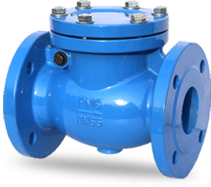
Seeschiffe, insbesondere LNG-Tanker und Bunkerschiffe, sind auf einen effizienten Flüssigkeitstransfer während des Be- und Entladens angewiesen. Marine Kryogenes Schwingrückschlagventil Es muss einen geringen Druckverlust und einen ungehinderten Durchfluss gewährleisten. Die für ein Schwenkrückschlagventil erforderliche interne Geometrie – die es der Scheibe ermöglicht, vollständig aus dem Durchflussweg herauszuschwenken – ist naturgemäß komplex.
2. Die Fertigungsprozesse verstehen
Um beurteilen zu können, welcher Ventiltyp überlegen ist, müssen wir uns ansehen, wie sie hergestellt werden.
Was ist Schmieden?
Schmieden ist ein Fertigungsverfahren, bei dem Metall durch gezielte Druckkräfte, typischerweise mittels Hammer oder Schmiedewerkzeug, geformt wird. Das Metall wird erhitzt (aber nicht geschmolzen) und anschließend mechanisch in die gewünschte Form gebracht.
- Der Vorteil: Durch das Schmieden wird die Kornstruktur des Metalls an die Form des Bauteils angepasst, was zu einer überlegenen mechanischen Festigkeit, einer ausgezeichneten Schlagfestigkeit und praktisch keiner Porosität oder inneren Hohlräumen führt.
- Die Einschränkung: Das Schmieden ist aufgrund der Größe und geometrischen Komplexität stark eingeschränkt. Die Herstellung der großen, hohlen und komplexen Innenräume eines Schwingrückschlagventils durch Schmieden ist bei größeren Abmessungen entweder unmöglich oder erfordert eine aufwändige und kostspielige Nachbearbeitung eines massiven Schmiedeblocks.
Was ist Casting?
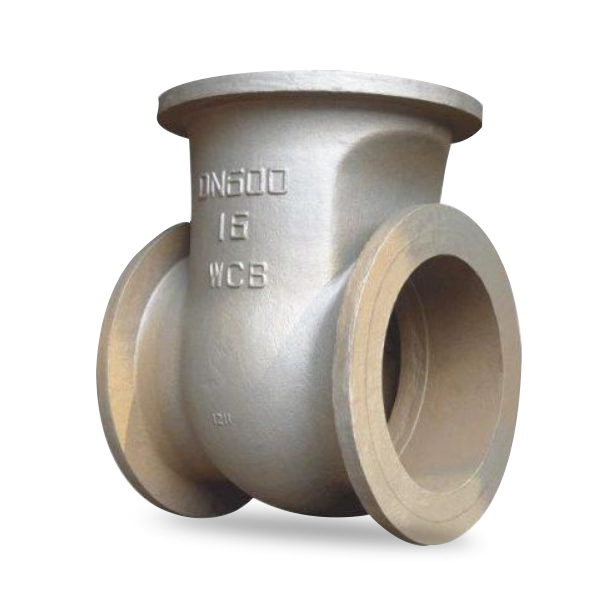
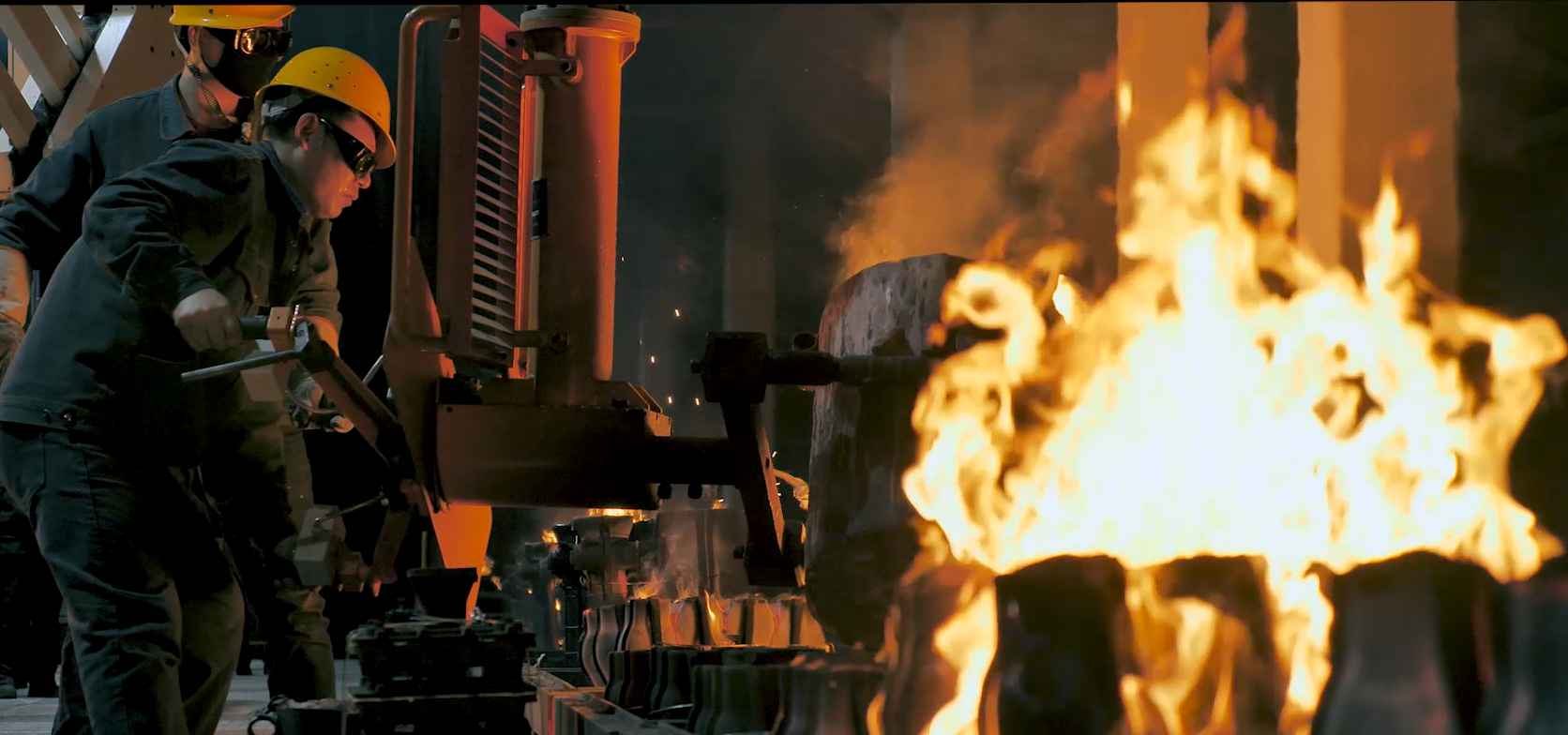
Beim Gießen wird Metall erhitzt, bis es vollständig geschmolzen ist, und anschließend in eine Form gegossen, die einen Hohlraum in der gewünschten Form aufweist. Sobald das Metall erstarrt ist, wird es aus der Form entnommen oder herausgebrochen.
- Der Vorteil: Das Gießen ist ein äußerst vielseitiges Verfahren. Es ermöglicht die Herstellung massiver Bauteile mit hochkomplexen inneren Geometrien – wie beispielsweise dem bauchigen Gehäuse eines Rückschlagventils – mit minimaler Nachbearbeitung. Es ist kostengünstig für große Durchmesser (z. B. bis zu 26 Zoll).
- Die Einschränkung: Historisch gesehen war der Guss anfällig für Fehler wie Schwindung, Porosität und Einschlüsse. Moderne Feingussverfahren, Sandguss mit hochentwickelten Harzbindemitteln und strenge zerstörungsfreie Prüfverfahren (ZfP) wie die Röntgenprüfung haben diese Probleme bei hochwertigen Industriearmaturen jedoch nahezu vollständig beseitigt.
3. Geschmiedete vs. gegossene Schwingrückschlagventile: Eine vergleichende Analyse
|
Merkmal / Parameter |
Ventile aus geschmiedetem Stahl |
Ventile aus Stahlguss |
Gewinner in der Kategorie Marine LNG (Großvolumige Anlagen) |
|
Größenverfügbarkeit |
Üblicherweise sind sie auf kleine Größen beschränkt (≤ DN 2″ / 50 mm). Größere Größen sind unerschwinglich teuer. |
Erhältlich in Nennweiten von DN 2″ bis DN 26″ und darüber hinaus. |
Stahlguss |
|
Innere Geometrie |
Komplexe Strömungswege lassen sich ohne umfangreiche Bearbeitung nur schwer realisieren. |
Ideal für optimierte Fluidströmungswege mit geringem Druckverlust. |
Stahlguss |
|
Materialintegrität |
Hervorragend; keine Porosität, kontinuierlicher Kornfluss. |
Ausgezeichnet, vorausgesetzt, es werden moderne zerstörungsfreie Prüfverfahren (Röntgenprüfung, Farbeindringprüfung) angewendet. |
Geschmiedet (knapp, aber Cast erfüllt alle Sicherheitsstandards) |
|
Kosteneffizienz |
Extrem hohe Kosten für Größen über 2 Zoll. |
Äußerst kosteneffektiv für mittlere bis große Rohrleitungssysteme. |
Stahlguss |
|
Gewicht |
Im Allgemeinen schwerer aufgrund der dickeren Wände, die durch den Schmiedeprozess und die Einschränkungen bei der Bearbeitung erforderlich sind. |
Kann hinsichtlich des Gewichts optimiert werden, was für die Konstruktion von Seeschiffen von entscheidender Bedeutung ist. |
Stahlguss |
Das Urteil zum Herstellungsprozess
Während geschmiedeter Stahl unbestreitbare mechanische Vorteile für Rohrleitungssysteme mit kleinem Durchmesser bietet, die extrem hohen Drücken ausgesetzt sind (z. B. Hydraulikleitungen oder Kesselspeiseleitungen unter extremen Betriebsbedingungen), Gussstahl ist der unbestrittene Champion für Marine-LNG-Schwingrückschlagventile in Größen ab 2 Zoll. Die Geometrie eines Schwingrückschlagventils erfordert einen großen Innenraum, damit sich die Scheibe vollständig aus dem Weg des kryogenen Fluids schwenken kann. Das Schmieden dieser Form in großen Durchmessern (wie z. B. 8-Zoll- oder 24-Zoll-Ventilen) ist wirtschaftlich nicht rentabel und technisch nicht praktikabel. Hochwertiger, gegossener austenitischer Edelstahl bietet hingegen die optimale Balance aus geometrischer Freiheit, Kältebeständigkeit und Wirtschaftlichkeit.
4. Warum ein Schwingrückschlagventil aus Stahlguss in maritimen LNG-Anwendungen dominiert
Bei der Ausrüstung eines LNG-Tankers, einer schwimmenden Speicher- und Regasifizierungseinheit (FSRU) oder eines LNG-Bunkerschiffs werden Gewicht und Platzbedarf genauestens geprüft.
Ein gut konstruiertes Schwingrückschlagventil aus Stahlguss bietet mehrere deutliche Vorteile für die Schiffsarchitektur:
- Optimierter Durchflusskoeffizient (Cv): Da die Form perfekt gestaltet werden kann, weisen Gussventile hochgradig aerodynamische Innenprofile auf. Dies minimiert Turbulenzen und Druckverluste, wodurch Kryopumpen weniger Energie verbrauchen – ein entscheidender Faktor für die Treibstoffeffizienz in der Schifffahrt.
- Materialexzellenz bei -196°C: Gießereien verarbeiten routinemäßig hochwertige austenitische Edelstähle wie ASTM A351-CF8M (Guss 316) und CF3M (Guss 316L). Diese Werkstoffe enthalten Molybdän und bieten dadurch eine außergewöhnliche Beständigkeit gegenüber der korrosiven Meeresatmosphäre (Salzwasser) bei gleichzeitig optimaler Duktilität bei den Temperaturen von flüssigem Erdgas.
- Nahtlose Integration: Gussventile können problemlos mit verschiedenen Endverbindungen hergestellt werden, darunter Flansch-, Stumpfschweiß- oder Ringverbindungs-Flachverbindungen (RJF), was eine nahtlose Integration in die Rohrleitungsabschnitte des Schiffes ermöglicht.
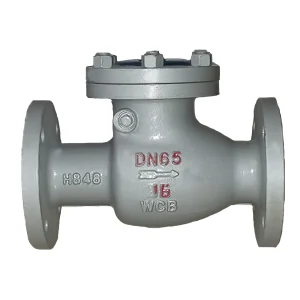
5. Tsunny Marine Kryogene Schwingrückschlagventile aus Stahlguss
Die theoretische Überlegenheit von Gussstahl für diese Anwendung zu verstehen, ist das eine, einen Hersteller auszuwählen, der diesen Prozess einwandfrei umsetzt, das andere. Für Schiffsingenieure und Beschaffungsspezialisten, die einen bewährten und zuverlässigen Partner suchen. Marine Kryogenes Schwingrückschlagventil, Tsunny Valve bietet branchenführende Lösungen, die speziell für die hohen Anforderungen des maritimen Flüssiggastransports entwickelt wurden.
Die aus Stahlguss gefertigten Schwingrückschlagventile von Tsunny sind so konstruiert, dass sie die globalen maritimen und industriellen Standards erfüllen und übertreffen und somit höchste Sicherheit beim Umgang mit kryogenen Flüssigkeiten gewährleisten.
Wichtigste Spezifikationen der kryogenen Schwingrückschlagventile von Tsunny:
- Auswahl hochwertiger Materialien: Die Ventilkörper sind aus hochwertigem Material gegossen. ASTM A351-CF3(M) / CF8(M) Edelstahl. Dies garantiert langfristige Beständigkeit in korrosiven Meeresumgebungen und verhindert Versprödung. -196°C.
- Fortschrittliche Dichtungstechnologie: Um unter kryogenen Bedingungen absolute Dichtheit (blasenfreie Absperrung) zu erreichen, nutzt Tsunny eine Kombination aus PCTFE-Weichdichtung oder robust Edelstahldichtung: ASTM A276-304L(HF). PCTFE ist dafür bekannt, seine mechanische Flexibilität auch bei tiefen kryogenen Temperaturen beizubehalten, während die hartbeschichtete Edelstahlvariante eine ausgezeichnete Verschleißfestigkeit gegenüber Hochgeschwindigkeitsströmungen bietet.
- Umfangreiches Größenspektrum: Da Seeschiffe eine Vielzahl von Rohrleitungsdimensionen benötigen, bietet Tsunny diese Gussventile in Größen von … an. Von DN 2″ bis hin zu DN 26″. Dadurch werden die Größenbeschränkungen von Schmiedeventilen vollständig umgangen und eine gleichbleibende Qualität im gesamten Rohrleitungsnetz gewährleistet.
- Hochdruckfähigkeiten: Die Ventile wurden für die hohen Druckanforderungen moderner kryogener Pumpensysteme entwickelt und sind für folgende Belastungen ausgelegt: ASME 150# bis 600# Druckklassen.
- Globale Konformität und Standards: Sicherheit auf See ist nicht verhandelbar. Die Ventile von Tsunny werden streng nach internationalen Standards gefertigt und geprüft, einschließlich BS, ASME, ASTM und KGSC. Darüber hinaus erfüllt ihre Siegelklasse vollständig die Anforderungen ASME B16.34.
- Vielseitige Anschlussarten: Um den unterschiedlichen Installationsanforderungen auf Schiffsdecks und Verteilern gerecht zu werden, bietet Tsunny Flansch-, Stumpfschweiß- und Ringfugenflansch Verbindungen.
Für detaillierte technische Zeichnungen, Leistungskurven und Beschaffungsanfragen sehen Sie sich bitte die vollständigen Spezifikationen des Produkts an. Tsunny Marine Kryogenes Schwingrückschlagventil aus Stahlguss auf ihrer offiziellen Website.
6. Schlussfolgerung
In der Debatte von Geschmiedetes vs. gegossenes Schwingrückschlagventil Für maritime LNG-Anwendungen wird die Schlussfolgerung durch Praktikabilität, Fluiddynamik und Maßstab bestimmt. Während das Schmieden nach wie vor eine ausgezeichnete Wahl für Hochdruck-Versorgungsleitungen mit kleinem Durchmesser darstellt, erfordern die besonderen geometrischen Anforderungen und der große Durchmesserbedarf von LNG-Haupttransferleitungen … Schwingrückschlagventil aus Stahlguss die endgültige Wahl.
Durch die Verwendung hochwertiger austenitischer Edelstahlgussteile wie ASTM A351-CF8M können Hersteller Ventile anbieten, die sich durch außergewöhnliche Robustheit bei -196 °C, optimierte Strömungsdynamik zur Reduzierung des Druckverlusts und die strikte Einhaltung maritimer Sicherheitsstandards auszeichnen. Produkte wie die kryogenen Schwingrückschlagventile von Tsunny stellen die Spitze dieser Ingenieurskunst dar und bieten Schiffsbetreibern die Zuverlässigkeit, die sie benötigen, um die Herausforderungen der globalen LNG-Lieferkette sicher zu meistern.
7. Häufig gestellte Fragen
Frage 1: Warum wird ASTM A351-CF8M / CF3M häufig für kryogene Rückschlagventile in der Schifffahrt verwendet?
A: ASTM A351-CF8M und CF3M sind austenitische Gussstähle (entsprechend 316 und 316L). Sie eignen sich besonders für kryogene Anwendungen im maritimen Bereich, da ihre kubisch-flächenzentrierte (kfz) Mikrostruktur sie vor Versprödung bei Temperaturen bis zu -196 °C bewahrt. Der Zusatz von Molybdän in diesen Legierungen sorgt zudem für eine hervorragende Beständigkeit gegen chloridinduzierte Lochfraßkorrosion durch die aggressive Salzwasserumgebung.
Frage 2: Kann geschmiedeter Stahl für Schwingrückschlagventile mit großem Durchmesser (z. B. 24 Zoll) verwendet werden?
A: Theoretisch ist es zwar möglich, aber äußerst selten, unpraktisch und wirtschaftlich nicht rentabel. Das Schmieden eines komplexen Bauteils wie eines 24-Zoll-Rückschlagventils würde einen enorm massiven Stahlblock und hunderte Stunden schwerer Bearbeitung erfordern, um den Innenraum auszuhöhlen. Gießen ist das Standardverfahren, die bevorzugte und effizienteste Fertigungsmethode für Rückschlagventile mit einem Durchmesser von mehr als 2 Zoll, da es die komplexe Innengeometrie, die für das Öffnen der Scheibe erforderlich ist, problemlos umsetzt.
Frage 3: Welcher Dichtungstyp eignet sich am besten für ein kryogenes Rückschlagventil für den maritimen Einsatz bei -196°C?
A: Bei -196 °C gefrieren Standard-Elastomere (wie Nitril oder Viton) vollständig und zerbrechen, wodurch sie unbrauchbar werden. Für eine absolut dichte Abdichtung unter kryogenen Bedingungen verwenden Ingenieure daher moderne Polymere wie … PCTFE (Polychlortrifluorethylen). PCTFE behält auch bei kryogenen Temperaturen eine leichte Elastizität und eignet sich daher hervorragend als weiche Dichtung. Alternativ wird für Anwendungen mit abrasiven Partikeln oder höheren Drücken eine Metall-auf-Metall-Hartdichtung (z. B. nach ASTM A276-304L mit Hartauftragung) eingesetzt, um Langlebigkeit und hohe Dichtheit zu gewährleisten. Hersteller wie Tsunny bieten je nach Systemanforderungen oft beide Optionen an.