







The offshore oil and gas industry continually pushes the boundaries of engineering, extending operations into deeper waters and more extreme environments. At the heart of these complex offshore endeavors are Floating Production Storage and Offloading (FPSO) vessels. These massive floating facilities are essentially self-contained industrial plants operating at sea, tasked with processing, storing, and transferring highly volatile hydrocarbons. Given the immense operational pressures and the unforgiving maritime environment, the safety of an FPSO is non-negotiable. A cornerstone of this safety architecture is the reliable operation of critical fluid and gas management systems, where the FPSO marine safety valve plays an indispensable role.
When systems process fluids and gases at extreme pressures, the margin for error approaches zero. Over-pressurization can lead to catastrophic failures, equipment damage, environmental disasters, and, most importantly, loss of life. Therefore, the specification, selection, and maintenance of a high-pressure marine safety valve are not merely routine engineering tasks; they are critical safety imperatives that demand rigorous attention to detail and adherence to stringent international standards.
Understanding the Operating Environment of an FPSO
To appreciate the critical nature of valve specifications, one must first understand the harsh realities of the FPSO operating environment. Unlike onshore processing facilities, FPSOs face a unique combination of challenges:
-
Corrosive Marine Atmosphere: Continuous exposure to saltwater, salt-laden air, and high humidity aggressively accelerates corrosion, demanding materials with exceptional resistance.
-
Vessel Motion and Vibration: FPSOs are subject to the constant dynamic forces of ocean waves, currents, and wind. This persistent motion and the vibration from heavy onboard machinery (compressors, pumps, engines) can cause fatigue in mechanical components and affect the calibration and sealing of precision instruments like safety valves.
-
Extreme Pressures and Temperatures: The hydrocarbons extracted from deepwater reservoirs are often at extremely high pressures and temperatures. The processing equipment on the topsides must safely manage these extremes, requiring valves capable of withstanding immense stress.
-
Space Constraints: Topsides on an FPSO are densely packed with equipment. Components must be compact without sacrificing performance, and maintenance access can be restricted.
-
Remote Locations: FPSOs often operate far from shore, making immediate access to replacement parts or specialized maintenance personnel challenging. Reliability is paramount.
In this environment, an FPSO marine safety valve is the final line of defense against overpressure events in critical systems, including boilers, compressors, separators, and extensive piping networks.
The Role of High-Pressure Marine Safety Valves
|
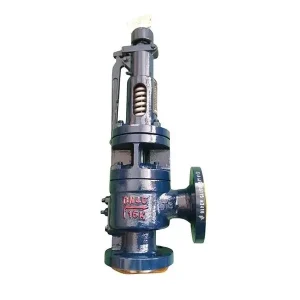
A high-pressure marine safety valve (often referred to as a Pressure Relief Valve or PRV) is an automatic pressure-protection device. Its primary function is to automatically vent excess fluid or gas when the pressure within a vessel or system exceeds a predetermined safe limit (the set pressure). Once the pressure drops back to a safe operating level (the reseating pressure), the valve must automatically close and seal tightly to prevent further loss of process fluid. These valves are designed to fail-safe; they do not rely on external power sources (like electricity or compressed air) to operate. The most common type uses a calibrated spring that holds a disc against a seat. When the system pressure exerts a force on the disc greater than the spring force, the valve opens. |
 |
Key Types of Offshore Marine Safety Valves
While the fundamental principle remains the same, several types of safety valves are utilized on FPSOs, depending on the specific application:
-
Spring-Loaded Pressure Relief Valves: The most common type, utilizing a robust spring to keep the valve closed until the set pressure is reached. They are versatile and reliable but can be sensitive to backpressure.
-
Pilot-Operated Relief Valves (PORV): These valves use the system pressure itself to keep the main valve tightly closed. A smaller pilot valve senses the pressure and, when the set point is reached, vents the pressure holding the main valve closed, allowing it to open. PORVs are ideal for high-pressure applications where operating pressures are very close to the set pressure, as they offer excellent seat tightness and are insensitive to backpressure.
-
Bellows-Sealed Safety Valves: A specific type of spring-loaded valve where a metallic bellows protects the spring and upper components from the process fluid. This design is crucial for handling highly corrosive, toxic, or viscous fluids and is also used to negate the effects of variable backpressure on the valve’s set point.
Critical Design Specifications and Parameters
Selecting the correct high-pressure marine safety valve requires a meticulous evaluation of numerous design specifications to ensure it can perform its life-saving function reliably under all anticipated conditions.
1. Set Pressure and Maximum Allowable Working Pressure (MAWP)
The most fundamental parameter is the set pressure—the precise point at which the valve begins to open. This value must be carefully calculated and must never exceed the Maximum Allowable Working Pressure (MAWP) of the equipment it protects. The MAWP is the maximum safe operating pressure designed for the vessel or pipeline.
Furthermore, engineers must consider the “accumulation pressure” or “overpressure.” This is the pressure increase over the set pressure allowed while the valve is discharging at full capacity. International codes (like ASME or API) dictate allowable overpressures, typically ranging from 3% (for fired boilers) to 10% (for unfired vessels), and sometimes up to 21% for fire cases.
2. Sizing and Required Capacity
An offshore marine safety valve is useless if it cannot discharge the excess fluid fast enough to prevent the pressure from continuing to rise. Sizing is a complex calculation based on the worst-case scenario that could lead to an overpressure event (e.g., blocked outlet, thermal expansion, tube rupture, external fire).
The valve must have a certified relieving capacity greater than the maximum required relief rate of the system. This capacity is determined by the geometry of the valve internals (the orifice size), the properties of the fluid (gas, liquid, or multi-phase), and the temperature.
3. Material Selection: Combating the Marine Environment
Material selection is arguably the most critical aspect of specifying an FPSO marine safety valve, given the aggressive combination of high-pressure hydrocarbons and the corrosive marine atmosphere.
-
Body Materials: Standard carbon steel may be acceptable in some benign applications, but for offshore environments, materials like Austenitic Stainless Steels (e.g., 316L), Duplex and Super-Duplex Stainless Steels, or high-nickel alloys (such as Alloy 400, Inconel 625, or Hastelloy C) are frequently required to resist chloride-induced stress corrosion cracking and pitting.
-
Trim Materials (Disc, Seat, and Nozzle): The internal components must withstand not only corrosion but also erosion from high-velocity discharge (especially if the fluid contains particulates) and extreme temperatures. High-grade stainless steels, sometimes with hard-facing treatments like Stellite, are common. For absolute leak tightness, specialized resilient soft seats (like PTFE or PEEK) may be used, provided they are compatible with the temperature and chemical properties of the fluid.
-
Spring Materials: The spring is the heart of the valve. It must maintain its precise tension over long periods and across wide temperature variations. Inconel or specialized stainless steel alloys are often selected for high-pressure, high-temperature service.
4. Backpressure Considerations
Backpressure is the pressure existing at the outlet of a safety valve. It can significantly affect the valve’s performance, specifically its set pressure and relieving capacity.
-
Constant Backpressure: Pressure in the discharge system that remains steady. Spring settings can usually be adjusted to compensate.
-
Variable/Built-up Backpressure: Pressure that develops in the discharge piping after the valve opens and begins to flow. Conventional spring-loaded valves are sensitive to this; if variable backpressure exceeds typically 10% of the set pressure, the valve may chatter (rapidly open and close), damaging the seat and reducing capacity.
In FPSO systems where safety valves discharge into complex, shared flare headers, variable backpressure is a major concern. In these scenarios, balanced bellows safety valves or pilot-operated relief valves are specified because their design isolates the set pressure mechanism from the effects of backpressure.
5. Temperature Extremes
Der high-pressure marine safety valve must operate flawlessly at both the normal operating temperature and the extreme relieving temperature. High temperatures can weaken materials and alter spring characteristics. Cryogenic temperatures (such as in LNG processing on some specialized FPSOs) require materials that will not become brittle, like austenitic stainless steels or specialized bronze alloys.
Summary of Key Valve Specifications for FPSO Applications
| Spezifikation | Beschreibung | Critical Considerations for FPSO |
|
Ventiltyp |
Spring-loaded, Pilot-operated, Balanced Bellows. |
Selection depends on backpressure, operating margin, and fluid type. Pilot-operated is favored for high pressures and tight operating margins. |
|
Körpermaterial |
Material forming the pressure boundary. |
Must resist severe marine corrosion (e.g., Duplex, Super-Duplex, Inconel). NACE MR0175 compliance often required for sour gas (H2S) service. |
|
Trim Material |
Internal parts (disc, seat, nozzle). |
Must resist erosion, corrosion, and maintain tightness (e.g., 316 SS with Stellite, Monel). |
|
Set Pressure |
Pressure at which valve opens. |
Must be set precisely and remain stable despite vessel vibration and motion. |
|
Relieving Capacity |
Volume of fluid discharged per unit time. |
Must be carefully sized for the worst-case upset scenario. |
|
Backpressure Limit |
Maximum allowable pressure at the valve outlet. |
Crucial in complex FPSO flare systems. High backpressure requires balanced bellows or pilot designs. |
|
Certifications |
Industry standards (ASME, API, ISO). |
Valves must carry appropriate stamps (e.g., ASME UV) and marine class society approvals (DNV, ABS). |
Installation and Maintenance Imperatives on FPSOs
The specification of a top-tier offshore marine safety valve is only the first step. Improper installation or neglected maintenance will render even the best valve useless.
Installation Best Practices
-
Vertical Orientation: Safety valves are precision instruments designed to operate vertically. Even a slight inclination (more than 1 degree) can cause the internal components to bind, leading to improper sealing or failure to open at the set pressure. This is a significant challenge on an FPSO, where the vessel itself is constantly pitching and rolling.
-
Inlet Piping: The piping between the protected vessel and the valve must be as short and direct as possible. Pressure loss in the inlet piping should typically not exceed 3% of the set pressure. Excessive inlet pressure loss can cause the valve to chatter, rapidly destroying the seat.
-
Discharge Piping: The discharge piping must be adequately supported to handle the significant reactive forces generated when a high-pressure marine safety valve discharges. It must also be sized correctly to prevent excessive built-up backpressure.
Maintenance and Testing
In the offshore environment, maintenance is paramount. Safety valves cannot be “install and forget” devices.
-
Routine Inspection: Visual inspections for external corrosion, damage, and leakage are necessary.
-
Periodic Calibration and Testing: Valves must be removed periodically and tested on a certified test bench to verify their set pressure, reseating pressure, and seat tightness (leakage). This testing often requires specialized hydraulic test benches capable of simulating extreme pressures.
-
In-Situ Testing: Advanced technologies now allow for in-situ testing (testing the valve while it remains installed and the system is operating). This is highly advantageous on an FPSO, minimizing downtime and the risks associated with removing heavy, high-pressure equipment.
Navigating the Regulatory Landscape
The design, manufacture, and deployment of an FPSO marine safety valve are governed by a dense web of international codes, standards, and Classification Society rules. Ensuring compliance is not optional; it is a legal and operational necessity.
-
ASME Boiler and Pressure Vessel Code (BPVC): Specifically Section I (Power Boilers) and Section VIII (Pressure Vessels) define the stringent design, testing, and certification requirements for safety valves. Valves meeting these codes carry the “V” or “UV” stamp, certifying their capacity and performance.
-
API (American Petroleum Institute) Standards:
-
API 520: Provides comprehensive guidelines for the sizing, selection, and installation of pressure-relieving devices in refineries and related industries.
-
API 526: Specifies the dimensions, pressure-temperature ratings, and materials for flanged steel pressure relief valves, standardizing designs across manufacturers.
-
API 527: Defines the stringent criteria for seat tightness and allowable leakage rates.
-
-
Marine Classification Societies: Organizations like DNV (Det Norske Veritas), ABS (American Bureau of Shipping), and Lloyd’s Register have specific rules for offshore installations. An offshore marine safety valve must often be Type Approved by these societies, verifying that the design is suitable for the marine environment and vessel motions.
-
NACE MR0175 / ISO 15156: For FPSOs handling “sour” hydrocarbons containing Hydrogen Sulfide ($H_2S$), materials must comply with these standards to prevent sulfide stress cracking.
The Future of FPSO Valve Technology
The future of the FPSO marine safety valve lies in enhanced reliability and digitalization.
-
Advanced Materials: Continuous research into novel alloys and coatings will provide even greater resistance to extreme pressures, temperatures, and corrosive agents, extending the service life of valves in deepwater applications.
-
Smart Valves and Digital Twins: The integration of sensors into safety valves is becoming more prevalent. These “smart valves” can continuously monitor parameters like temperature, pressure, acoustic emissions (to detect leakage), and valve position. This data feeds into digital twin models of the FPSO, enabling predictive maintenance—alerting operators to a potential valve issue before it fails or requires an emergency shutdown.
Abschluss
The safety of a Floating Production Storage and Offloading vessel is a complex equation where every component must perform flawlessly. Among these, the high-pressure marine safety valve stands as a critical guardian against catastrophic overpressure events. Specifying the correct FPSO marine safety valve requires a deep understanding of fluid dynamics, material science, and stringent international regulations. By adhering to rigorous design specifications—from precise capacity sizing and advanced material selection to careful consideration of backpressure and vessel dynamics—engineers ensure that these vital devices remain reliable sentinels, safeguarding the vessel, the environment, and the lives of the crew operating in the world’s most demanding maritime environments.
Häufig gestellte Fragen
1. Why are Pilot-Operated Relief Valves (PORVs) often preferred over standard spring-loaded valves for high-pressure FPSO applications?
PORVs are often preferred in high-pressure offshore applications for two main reasons. First, they allow the system to operate much closer to the valve’s set pressure (up to 95-98% of set pressure) without the valve leaking or “simmering.” This maximizes the operational efficiency of the vessel. Second, PORVs are highly resistant to the effects of variable backpressure, which is common in complex FPSO flare header systems, ensuring the valve opens precisely at the intended pressure regardless of downstream conditions.
2. How does the constant motion of an FPSO affect the performance of a marine safety valve, and how is this mitigated?
The constant pitching, rolling, and vibration of an FPSO can cause the internal components of a traditional safety valve to bind or misalign, potentially altering the set pressure or causing leakage. This is mitigated through robust valve design—such as using heavier duty internal guiding mechanisms and ensuring precise alignment during manufacturing. Furthermore, marine classification societies (like DNV or ABS) require these valves to be designed and tested to withstand specific vibration and inclination parameters to earn Type Approval for offshore use.
3. What is the significance of the API 527 standard when specifying an offshore marine safety valve?
API 527 is the critical standard for determining the seat tightness of pressure relief valves. It establishes strict, allowable leakage rates (often measured in bubbles per minute for gas or drops per minute for liquid) when the system pressure is operating just below the valve’s set pressure. Strict adherence to API 527 is essential on an FPSO to prevent the continuous, slow leakage of valuable and potentially hazardous hydrocarbon gases or liquids into the environment or flare system during normal operations.