










The marine environment presents a unique set of challenges for mechanical equipment, and few components are as critical—or as vulnerable—as marine safety valves. These devices are the last line of defense against catastrophic overpressure events in a ship’s boilers, pressure vessels, and piping systems. However, the relentless vibration characteristic of a ship’s engine room can significantly compromise their performance. One of the most persistent and damaging problems encountered in these harsh conditions is valve chatter.
Understanding Valve Chatter
| Valve chatter is characterized by the rapid, uncontrolled opening and closing of a safety valve. Instead of a clean “pop” open when set pressure is reached, followed by a decisive closure when pressure drops, the valve disc rapidly bounces against the nozzle seat. This high-frequency oscillation is not just an annoying noise; it is a highly destructive phenomenon. | 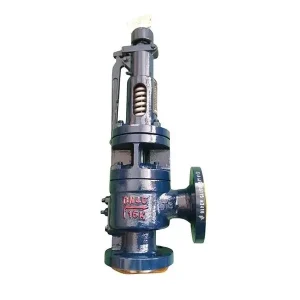 |
The Mechanics of Chatter
To understand chatter, one must understand the basic operation of a conventional spring-loaded safety valve. The valve is held closed by the force of a compressed spring. When the system pressure exerts a force greater than the spring force, the valve opens, relieving the pressure.
Chatter occurs when there is an imbalance in the forces acting on the valve disc. Specifically, if the forces holding the valve open (system pressure and the kinetic energy of the escaping fluid) are momentarily overcome by the closing force (the spring), the valve starts to close. If the system pressure then immediately rebuilds, the valve is forced open again. This cycle repeats rapidly.
Why is Chatter So Destructive?
The consequences of prolonged valve chatter are severe and multifaceted:
-
Seat and Disc Damage: The rapid, forceful impact between the disc and the nozzle seat causes mechanical damage, such as galling, pitting, and wire-drawing (erosion). This compromises the valve’s sealing integrity, leading to persistent leaks even during normal operation.
-
Reduced Relieving Capacity: When a valve chatters, it does not achieve its full lift. Consequently, it cannot discharge fluid at its rated capacity, potentially allowing system pressure to rise to dangerous levels.
-
Fatigue Failure: The high-frequency vibration associated with chatter induces severe cyclic stress on the valve components, particularly the spring, spindle, and guiding surfaces. This can lead to premature fatigue failure of these critical parts.
-
System Instability: Chatter creates rapid pressure pulsations within the connected piping system, which can damage other instruments and components and further exacerbate the vibration problems in the engine room.
The Role of High-Vibration in the Engine Room
Ship engine rooms are inherently high-vibration environments. The massive diesel engines, turbines, generators, and complex network of pumps and compressors generate a wide spectrum of frequencies and amplitudes. This ambient vibration acts as a catalyst, significantly increasing the likelihood and severity of marine safety valve chatter.
How Ambient Vibration Induces Chatter
Ambient vibration can initiate or amplify chatter through several mechanisms:
-
Resonance: If the natural frequency of the safety valve assembly (or its connected piping) matches a forcing frequency generated by the ship’s machinery, resonance occurs. This drastically amplifies the vibration amplitude, making chatter almost inevitable.
-
Mechanical Interference: Excessive vibration can cause temporary misalignment or binding between the valve disc and its guiding surfaces, altering the friction forces and disrupting the delicate balance required for stable operation.
-
False Actuation: In extreme cases, severe vibration can momentarily overcome the spring force, causing the valve to “simmer” or partially lift even when the system pressure is below the set point, initiating a chatter cycle.
Marine Safety Valve Troubleshooting: Diagnosing Chatter
Effective troubleshooting requires a systematic approach to identify the root cause of the chatter. It is rarely a single issue; often, it is a combination of factors exacerbated by the marine environment.
Here is a structured approach to marine safety valve troubleshooting when chatter is suspected:
Step 1: Initial Observation and Data Gathering
Before dismantling anything, gather as much operational data as possible.
-
Listen and Observe: Chatter is often audible. It sounds like a rapid rattling or buzzing. Observe the valve for visible vibration or leakage.
-
Review Operational Logs: Determine when the chatter occurs. Does it happen only during specific operations (e.g., startup, high load, maneuvering)?
-
Check System Parameters: Record the actual operating pressure, the valve’s set pressure, and the blowdown (the difference between the set pressure and the reseating pressure).
Step 2: Evaluating the Installation and Piping
The leading cause of safety valve chatter is improper installation, specifically related to the inlet and outlet piping.
| Piping Issue | How it Causes Chatter | Troubleshooting Action |
|
Excessive Inlet Pressure Drop |
If the piping between the protected vessel and the valve is too long or restrictive, the pressure at the valve inlet drops significantly when the valve opens. The valve senses this lower pressure and tries to close, initiating chatter. The general rule is that inlet pressure drop should not exceed 3% of the set pressure. |
Calculate the frictional pressure drop in the inlet piping at the valve’s rated capacity. Consider redesigning the piping to be shorter and more direct, or increasing the pipe diameter. |
|
Excessive Built-up Backpressure |
Backpressure is the pressure in the discharge piping. If the discharge piping is restrictive, pressure builds up when the valve opens, adding to the spring force and pushing the valve closed prematurely. |
Calculate the built-up backpressure. It generally should not exceed 10% of the set pressure for conventional valves. Ensure the discharge pipe size is equal to or larger than the valve outlet size and minimize elbows and restrictions. |
|
Piping Resonance |
The piping itself may be resonating with engine room vibrations, transmitting these forces directly to the valve. |
Conduct a vibration analysis of the piping system. Install appropriate pipe supports, dampeners, or flexible connections to isolate the valve from the main vibration sources. |
Step 3: Assessing the Valve Application and Sizing
An oversized valve is highly susceptible to chatter.
-
Oversizing: If a valve has a significantly larger capacity than the system requires, it will relieve the pressure very quickly. The system pressure drops rapidly below the blowdown point, causing the valve to snap shut. The pressure then rebuilds, and the cycle repeats.
-
Action: Verify the required relieving capacity of the system and compare it to the valve’s rated capacity. If the valve is vastly oversized, consider replacing it with a correctly sized unit or using multiple smaller valves.
-
-
Incorrect Set Pressure vs. Operating Pressure: The operating pressure must be sufficiently below the set pressure to ensure the valve remains tightly closed. The minimum margin varies, but a typical recommendation is that the operating pressure should not exceed 90% of the set pressure.
-
Action: Check if the system operating pressure is too close to the set pressure. Adjust the operating pressure downward if possible, or verify that the valve is designed for the specific differential.
-
Step 4: Internal Valve Inspection
If the piping and application are correct, the problem likely lies within the valve itself. This requires the valve to be removed, tested, and inspected by qualified personnel, typically at an authorized repair facility.
-
Damaged Seats: Inspect the disc and nozzle seats for damage caused by previous chatter or debris. Damaged seats must be lapped or replaced to ensure a tight seal and proper fluid flow dynamics.
-
Incorrect Ring Adjustments: Many engine marine safety valve designs incorporate adjustable blowdown rings (adjusting rings). These rings control the opening and closing characteristics by altering the shape of the escaping fluid jet.
-
Action: Incorrectly positioned rings can cause erratic operation and chatter. Refer to the manufacturer’s manual for the correct ring settings. Adjusting rings is a delicate process and should only be performed by trained technicians.
-
-
Binding or Friction: Inspect the guiding surfaces (spindle, guide, disc holder) for scoring, galling, or the accumulation of deposits (e.g., hardened oil or scale). Excessive friction prevents the valve from opening and closing smoothly.
-
Action: Clean, polish, or replace damaged components to ensure free movement.
-
-
Weak or Damaged Spring: A spring that has lost its tension due to fatigue, high temperature, or corrosion will not provide the correct closing force, leading to instability.
-
Action: Test the spring rate and inspect it for signs of damage. Replace if necessary.
-
Mitigation Strategies for High-Vibration Environments
In a ship’s engine room, eliminating ambient vibration is impossible. Therefore, the goal is to isolate the safety valve or utilize designs inherently resistant to vibration.
1. Vibration Isolation and Dampening
-
Robust Pipe Supports: Ensure that both the inlet and outlet piping are rigidly supported to minimize movement. However, supports must also accommodate thermal expansion.
-
Vibration Dampeners: Install specialized vibration dampeners on the piping near the safety valve to absorb high-frequency energy.
-
Isolating Mounts: In extreme cases, consider using isolating mounts for the equipment the valve protects, reducing the transmission of structural vibration.
2. Upgrading to Advanced Valve Designs
If conventional spring-loaded valves continue to chatter despite corrective actions, it may be necessary to upgrade to more robust technologies.
Pilot-Operated Safety Relief Valves (POSRV)
Pilot-operated valves offer significant advantages in high-vibration applications. In a POSRV, the main valve is held closed by system pressure acting on a larger area above the main disc (the dome). A smaller, separate pilot valve controls the pressure in the dome.
-
Vibration Resistance: Because the main valve is held closed by system pressure rather than a large spring, it is far less susceptible to being vibrated open. The pilot valve, being smaller and lighter, is also less affected by vibration.
-
Stable Operation: POSRVs can operate very close to the set pressure (often up to 95% or more) without simmering or chattering.
-
Remote Sensing: The pilot can sense pressure at a location away from the main valve inlet, mitigating the effects of inlet pressure drop.
Supplementary Loading Systems (SLS)
An SLS can be added to a conventional spring-loaded valve. It uses pneumatic or hydraulic pressure to apply additional closing force to the valve disc during normal operation.
-
Increased Seat Tightness: The added force ensures the valve remains tightly closed despite severe vibration or operating pressures very close to the set point.
-
Controlled Actuation: When the set pressure is reached, the supplementary load is automatically released, allowing the valve to open normally.
3. Implementing a Rigorous Maintenance Program
Preventative maintenance is crucial in the marine environment.
-
Regular Testing: Conduct frequent testing (e.g., in-situ lift tests or bench testing) to verify the set pressure and ensure the valve operates smoothly.
-
Vibration Monitoring: Implement a condition monitoring program that includes vibration analysis of the equipment and piping near critical safety valves. This can detect changes in vibration signatures before they cause chatter or failure.
-
Prompt Repair: Address any signs of leakage or simmering immediately. A small leak can quickly escalate into severe seat damage and chatter.
Conclusion
Safety valve chatter in a ship’s engine room is a complex problem demanding serious attention. It is not merely an operational nuisance; it is a progressive failure mechanism that compromises the safety of the vessel and its crew.
By understanding the root causes—particularly the interaction between fluid dynamics and ambient vibration—and by employing a systematic approach to troubleshooting, marine engineers can effectively diagnose and resolve chatter issues. Whether it requires piping modifications, precise internal adjustments, or upgrading to advanced valve technologies like pilot-operated designs, proactive mitigation is essential for ensuring the reliable and safe operation of these critical pressure relief systems.
FAQs
1. How can I tell if my safety valve is chattering or just simmering?
Simmering is a slight, steady leakage or hissing sound that occurs when the system pressure is very close to the set pressure, but the valve has not fully opened. It happens because the upward force of the pressure is almost equaling the downward force of the spring.
Chatter, on the other hand, is a violent, rapid open-and-close action. It produces a distinct rattling or hammering noise, often accompanied by significant vibration in the valve and piping. While simmering is undesirable and can lead to seat damage over time, chatter is an immediate threat to the valve’s integrity and requires immediate action.
2. Can I adjust the blowdown rings myself to fix the chatter?
Adjusting the blowdown rings (adjusting rings) is a highly specialized task that significantly alters the valve’s performance characteristics. Incorrect adjustments can make the chatter worse or prevent the valve from achieving its required lift, creating a dangerous overpressure situation.
These adjustments should only be performed by certified technicians from the manufacturer or an authorized repair facility, often requiring specific tools and testing equipment. Never attempt to adjust these rings without proper training and documentation.
3. Are Pilot-Operated Safety Relief Valves (POSRVs) suitable for all marine applications?
While POSRVs offer excellent resistance to vibration and allow operation closer to the set point, they are not universally applicable. They are generally not recommended for services involving highly viscous fluids, fluids with significant solid particulates, or fluids that tend to polymerize or crystallize, as these can foul the small internal passages of the pilot mechanism.
For dirty or highly viscous services, conventional spring-loaded valves (potentially equipped with a supplementary loading system or specific trim designs) are often the better choice, provided the installation and piping are optimized to prevent chatter.